

EN

Yuexin |Junior Brand Manager Cricket
Estimated reading time: 10 mins
Lighting a fire has been essential to human life since ancient times. It began as a basic survival need, providing warmth, protection from the wilderness, and a means for cooking. Today, fire is also about creating a cozy atmosphere, adding charm to rituals, and enriching cultural traditions. The tools for lighting fire have also evolved to better suit our lifestyle, offering greater convenience and efficiency. Lighters, as one of the modern tools for fire lighting, are compact mechanisms that enable many meaningful moments with their simplicity and reliable flame production.
Among the various types of lighters, flint lighters and electronic lighters are two of the most classic and common options. So how do they work and what makes them different? Let’s dive into the mechanics behind flint and electronic lighters.
Every flame needs three elements: oxygen, heat, and fuel. Both flint and electronic lighters rely on a fuel blend of butane and propane, chosen for its efficiency and safety. Butane burns cleanly with minimal odor, making it ideal for indoor and personal use. Propane, with its lower boiling point, ensures reliable ignition even in colder climates.
While the fuel is shared, the spark generation is where flint and electronic lighters diverge.
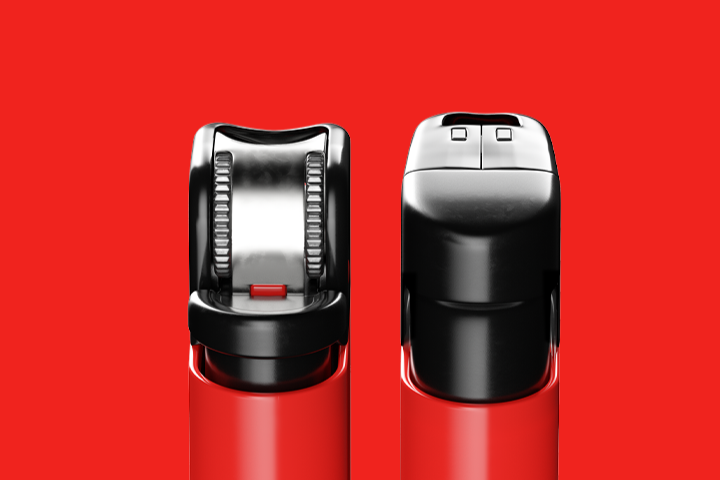
Flint lighters generate sparks through friction. A small rod made from rare earth materials, commonly referred to as the "flint", which is pressed against a spark wheel by a spring. When the wheel is rotated, it scrapes the flint, producing hot metal particles that can ignite the gas.
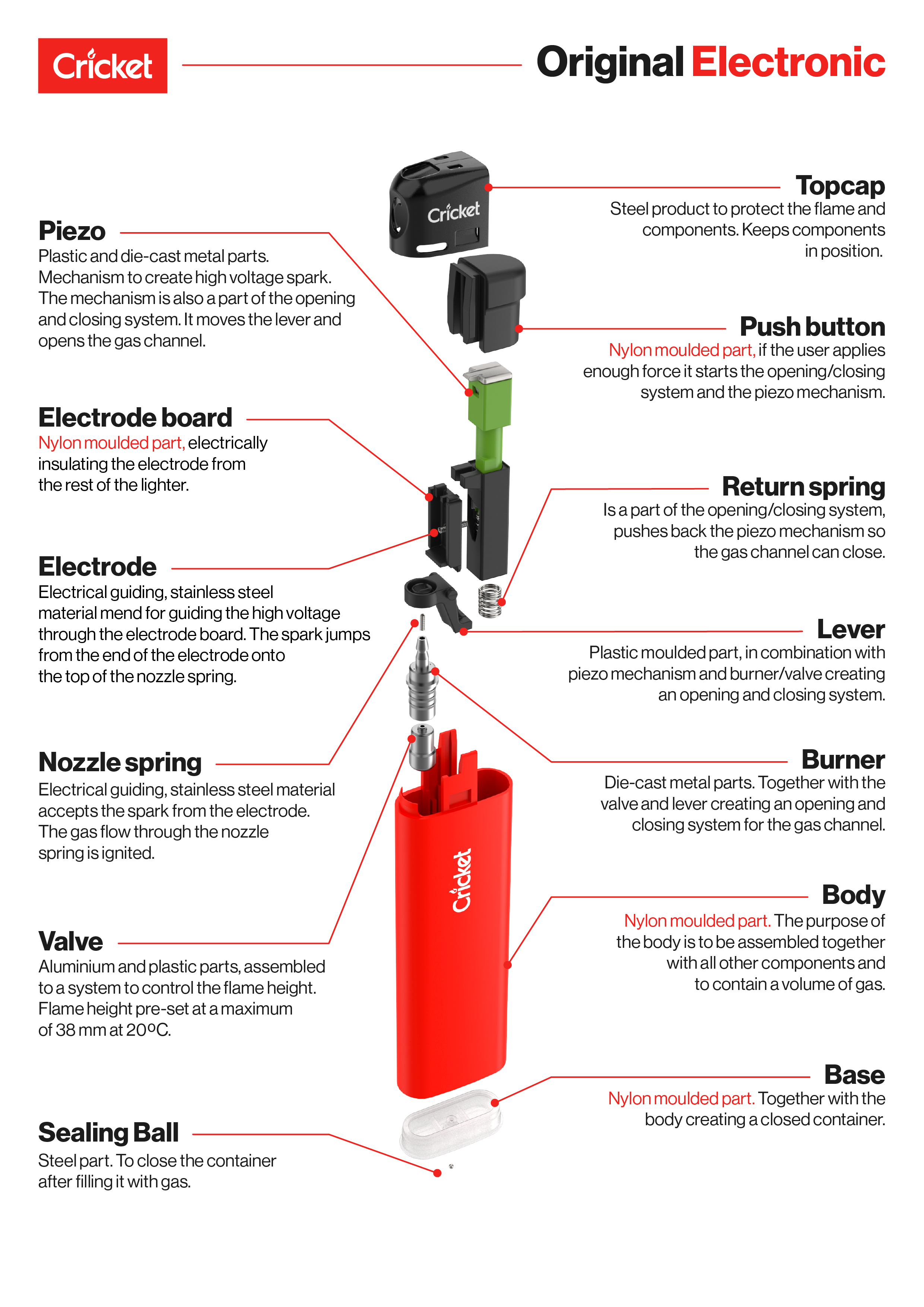
Electronic lighters take a different approach. Instead of friction, they generate sparks through a piezo electric mechanism. Pressing the button compresses a crystal, creating a high-voltage electrical discharge that jumps across the burner area to ignite the gas.
The process begins with rotating the spark wheel and activating the lever consecutively which opens the valve and releases butane gas. The spark wheel rubs against the flint, which is held in place by a spring that maintains constant pressure. The resulting friction generates sparks, which are directed toward the burner area. As the gas flows out and mixes with air, the sparks ignite it, producing a flame. Once you release the lever, the valve closes, cutting off the gas and extinguishing the flame.

In an electronic lighter, pressing the lever activates the piezo mechanism and opens the gas valve at the same time. The piezo mechanism works on the piezoelectric principle: A high voltage is generated by the piezoelectric effect, where mechanical stress on a piezo electric crystal, creates electric charge.
This high-voltage spark then travels through an insulated electrode, jumping from the electrode tip to the nearby nozzle spring, where ignition of the gas mixture occurs. As the butane gas flows through the burner and nozzle, it meets the spark and ignites instantly. When you release the button, the spring will close the valve, which will stop the gas flow and extinguish the flame, while another spring will reset the piezo mechanism.
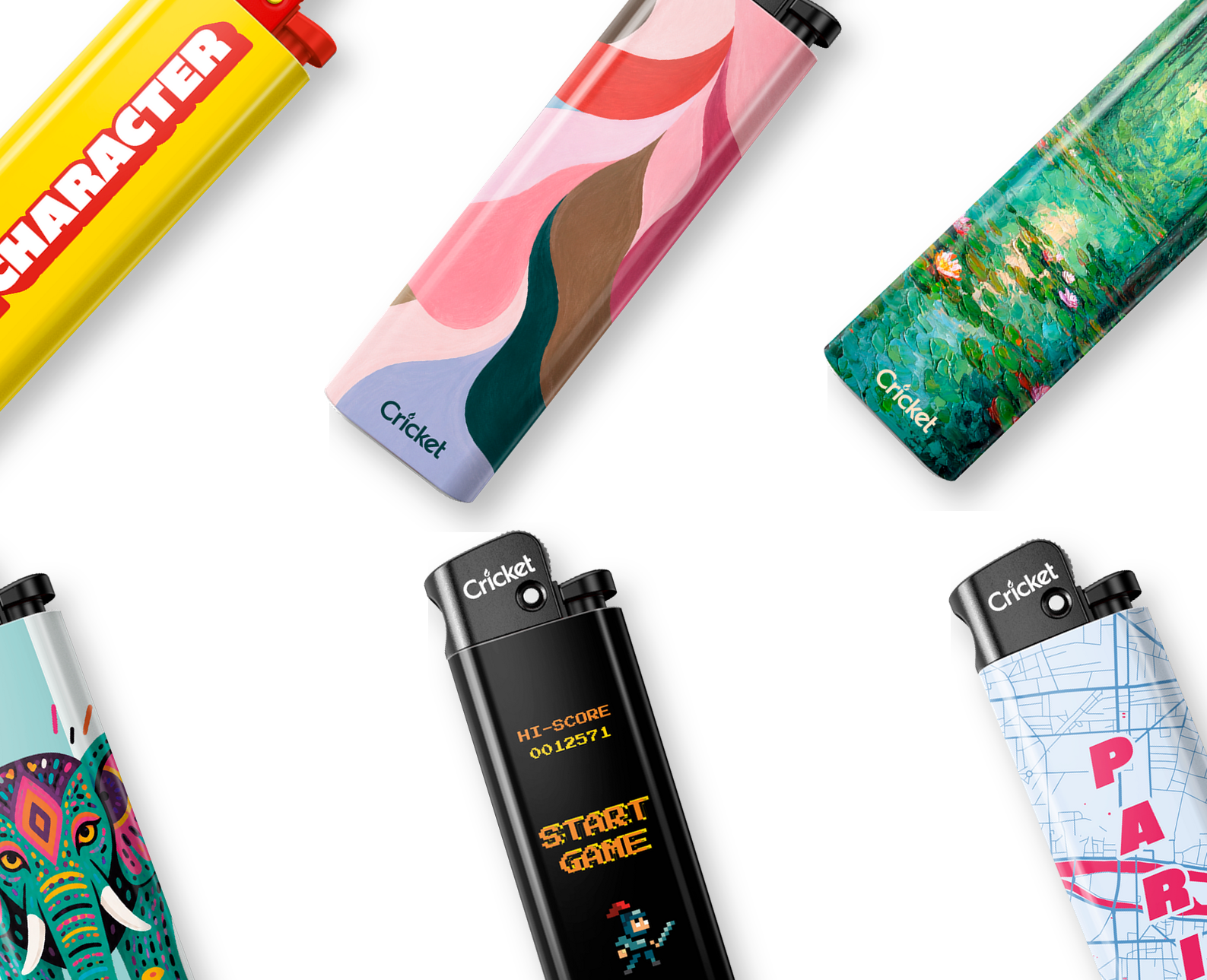
Lighting a flame is a personal ritual. Some users are drawn to the classic tactile feel of a flint lighter: the satisfying click, the vintage charm, and the sense of tradition. Others prefer the sleek, modern convenience of an electronic lighter, which offers quick ignition with minimal effort.
Both types serve the same purpose: delivering fire. The choice ultimately depends on your lifestyle, aesthetic preferences, and how you connect with the act of lighting.
While flint and electronic lighters differ in how they create a spark, the real measure of a lighter’s quality goes beyond ignition. It’s about how safely, consistently, and cleanly that flame is delivered. This is where engineering excellence comes into play, and where brands like Cricket stand out. Let’s take a closer look at the design features that make a high-quality lighter not just functional, but dependable.
Cricket introduced a proprietary fixed flame valve system in 1977. The lighter’s valve is engineered to release a precise, fixed amount of gas when activated. A membrane specially designed for Cricket regulates the gas flow, producing a stable, clean-burning flame.
This design ensures that the flame height is pre-set and cannot be manually adjusted, significantly reducing the risk of accidental high flames. Unlike many low quality lighters that include a flame adjustment wheel, fixed flame lighters omit this feature entirely. This makes the lighter safer and more predictable for everyday use.
Cricket valve system is designed to prevent dust and dirt from obstructing the fuel flow, which helps maintain reliable ignition over time. The valve system includes tight tolerances and sealed components that minimize the chance of external particles entering the fuel path. This helps maintain a clean and uninterrupted flow of butane gas to the burner.
In the Cricket valve system, protective shields near the valve opening act as barriers, protecting sensitive parts from debris and or dust. This is especially important for users who carry lighters in pockets or bags where debris can accumulate.
Cricket lighters use a spring-loaded lever system that automatically closes the valve when the pushbutton is released. This mechanism works on the lever principle: when you let go of the button on the right side of lighter, the lever spring underneath pushes the lever upward. This upward motion acts as a pivot, causing the opposite end of the lever to press downward on the rubber seal inside the burner, which closes the valve located on the left side. As a result, the gas flow stops immediately after use, ensuring both safety and fuel efficiency.
Cricket was the first brand to introduce child-resistant lighters in 1992. Its ignition system is engineered to meet international safety standards by requiring greater force and coordination, made possible through enhanced spring tension and friction-based components. This design makes it difficult for young children to operate while remaining intuitive and easy for adults to use.
When it comes to reliability, the material behind your lighter matters more than you might think. That’s why Cricket uses nylon. Nylon isn’t just durable, it’s impact-resistant, heat-resistant, and even self-extinguishing, adding an extra layer of safety. Its strength allows us to create thinner walls without sacrificing durability, which means we use less material for every gram of gas compared to most of other lighters. A lighter with minimal impact on the planet that feels solid, performs consistently, and is built to last.
In the world of lighters, flint and electronic lighters each offer a unique blend of tradition and innovation. While their internal mechanics differ, their purpose remains the same: to bring fire to our fingertips, safely and reliably. Whether you’re drawn to the nostalgic charm of a flint spark or the effortless precision of a piezo click, the lighter you choose becomes part of your everyday rituals. So next time when you strike a flame, take a moment to appreciate the clever engineering behind that tiny spark, and the big role it plays in lighting up life’s little moments.
Special thanks to Jacob Arends, Managing Director at Cricket Lighters Manila Factory, and Carel Sewalt, Engineer Product Development at Cricket Lighters Assen Factory, for providing insights to this article.


Even though we are very happy that you are contacting us we would like you to know that we are currently in over 140 countries and receive lots of inquiries. So please be patient and we’ll get back to you as soon as possible. Have a great day!
Even though we are very happy that you are contacting us we would like you to know that we are currently in over 140 countries and receive lots of inquiries. So please be patient and we’ll get back to you as soon as possible. Have a great day!
Even though we are very happy that you are contacting us we would like you to know that we are currently in over 140 countries and receive lots of inquiries. So please be patient and we’ll get back to you as soon as possible. Have a great day!

.png)


.png)

.jpg)


